Diagnosis · 6 min read
Broken Garage Door Spring: How to Tell, and Why You Must Not Touch It
The springs do the lifting. The motor only steers. That one sentence explains almost everything about how a garage door fails, and it is why a broken spring turns a working door into an 80 kilogram problem in the space of a single bang.
The three signs, in the order people notice them
First, the noise. A torsion spring letting go is loud — households routinely describe it as a gunshot or something heavy falling over in the garage overnight. Nothing else on a garage door makes that sound.
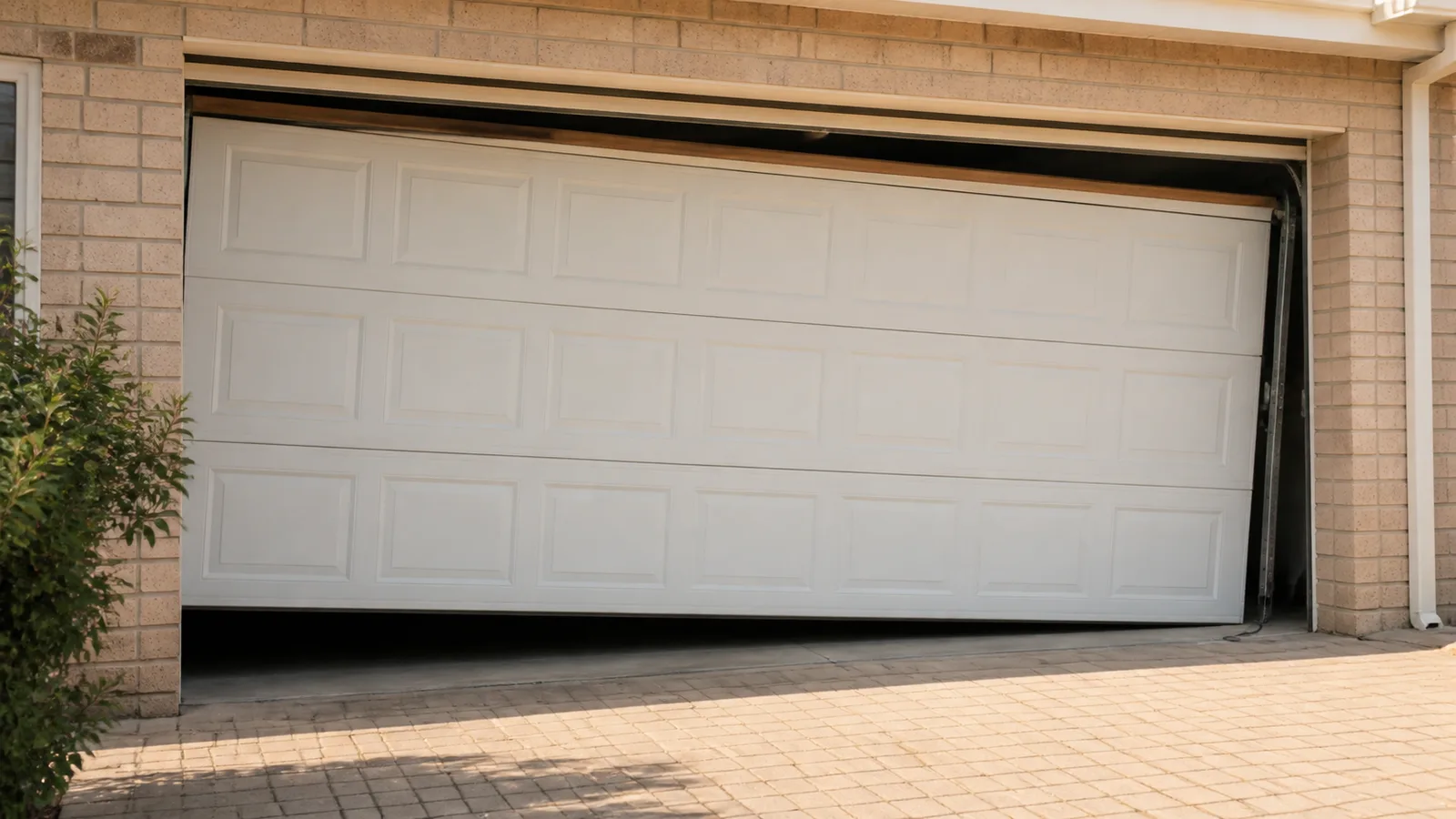
Second, the weight. Try to lift the door by hand and it feels like it has been filled with concrete. A correctly balanced door of any size should be liftable with modest effort and should stay roughly where you leave it. If it slams down the moment you let go, or will not move at all, the spring is not doing its job.
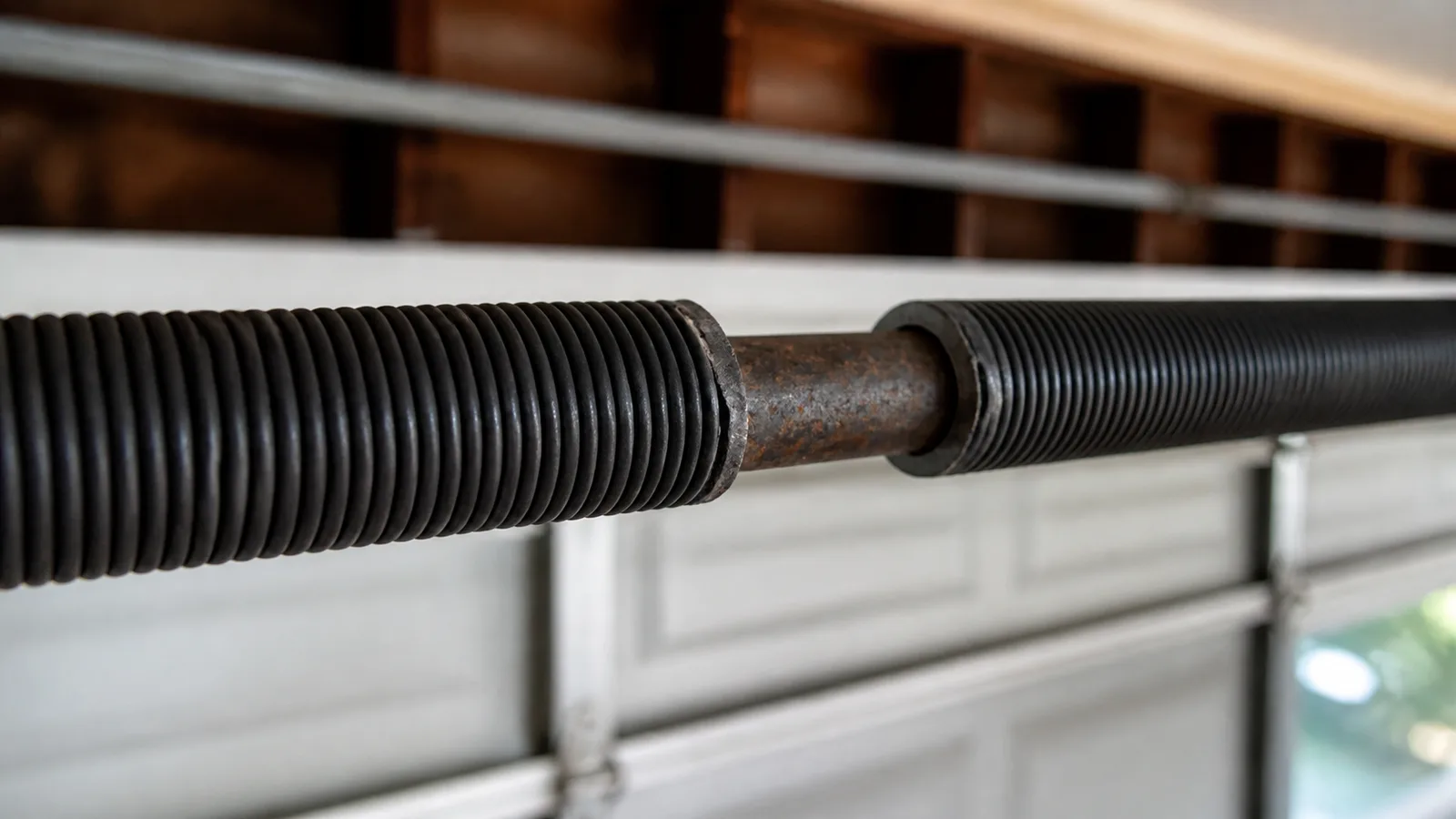
Third, the gap. Look at the coiled spring on the shaft above the door. An intact torsion spring is a continuous tight coil. A broken one shows an obvious gap of a few centimetres, as though a section has been cut out. That is the confirmation.
Why there are no instructions here
This is the one place on this site where we will not soften anything. A torsion spring under tension stores enough energy to break bones or kill, and it releases all of it in an instant if it is handled without the right winding bars and the training to use them. The injuries from getting this wrong are not the sort you walk off.
Plenty of pages will show you the procedure. We will not, and the reason is not liability — it is that the failure mode is catastrophic and the money saved is not worth it.
What we will tell you is exactly what to do instead: leave the door where it is, do not press the remote again, and call somebody who does this every day.
Why running the motor makes it much worse
This is the expensive mistake, and we see it weekly. A spring goes, the door will not lift, and the natural response is to press the button a few more times to see if it catches.
What is actually happening is that the motor — designed to guide a balanced door, not to lift a dead weight — is dragging the full mass of the door on its carriage and cables. Cables jump their drums. The carriage strips. The chain or belt stretches. The motor's own gears wear in minutes.
So a spring replacement becomes a spring, cable, drum, carriage and motor replacement. The bang you heard was the cheap part of the problem.
Why one broken spring means replacing both
On a two-spring door, both springs have done exactly the same number of cycles. The one that broke got there first by a matter of weeks.
Fitting one new spring alongside a fatigued one gives you an unbalanced door — the new spring is stronger, so the door pulls to one side and travels out of square — and a second call-out within months when the old one goes.
Springs are rated in cycles rather than years, which is why a household that opens the door six times a day wears them out far faster than one that opens it twice. Perth's UV and temperature swings shorten that life further on west-facing doors.
What happens when we arrive
The springs come off, matched replacements go on, and the door is rebalanced and re-tested — because a door left out of balance is the thing that kills its next motor. We also check the cables and drums, since they take the punishment when a spring fails.
You get told what failed, what we replaced, and what looks close to the end. The estimate comes before the work, and you can decline it.
Can I still use the door until you get there?
No. Leave it. If the car is inside and you genuinely need it out, say so on the phone — that changes how we prioritise the call, and it is a much better outcome than forcing a door and finding it comes down on the bonnet.
Still stuck?
Describe what the door is doing and we will tell you what it is. The diagnosis is free and covers 288 Perth suburbs — and if it turns out to be something you can sort out yourself, we will say so.