Diagnosis · 7 min read
Why Won't My Garage Door Close? 8 Causes, Ranked by How Common They Are
A door that opens fine and refuses to close is the single most common call we get, and the good news is that the most frequent cause is also the one you can sort out yourself before anybody charges you for a visit. Below are the eight real causes in the order we actually find them, not in the order that makes a repair sound impressive.
1. The photo-eye sensors are blocked or knocked out of line
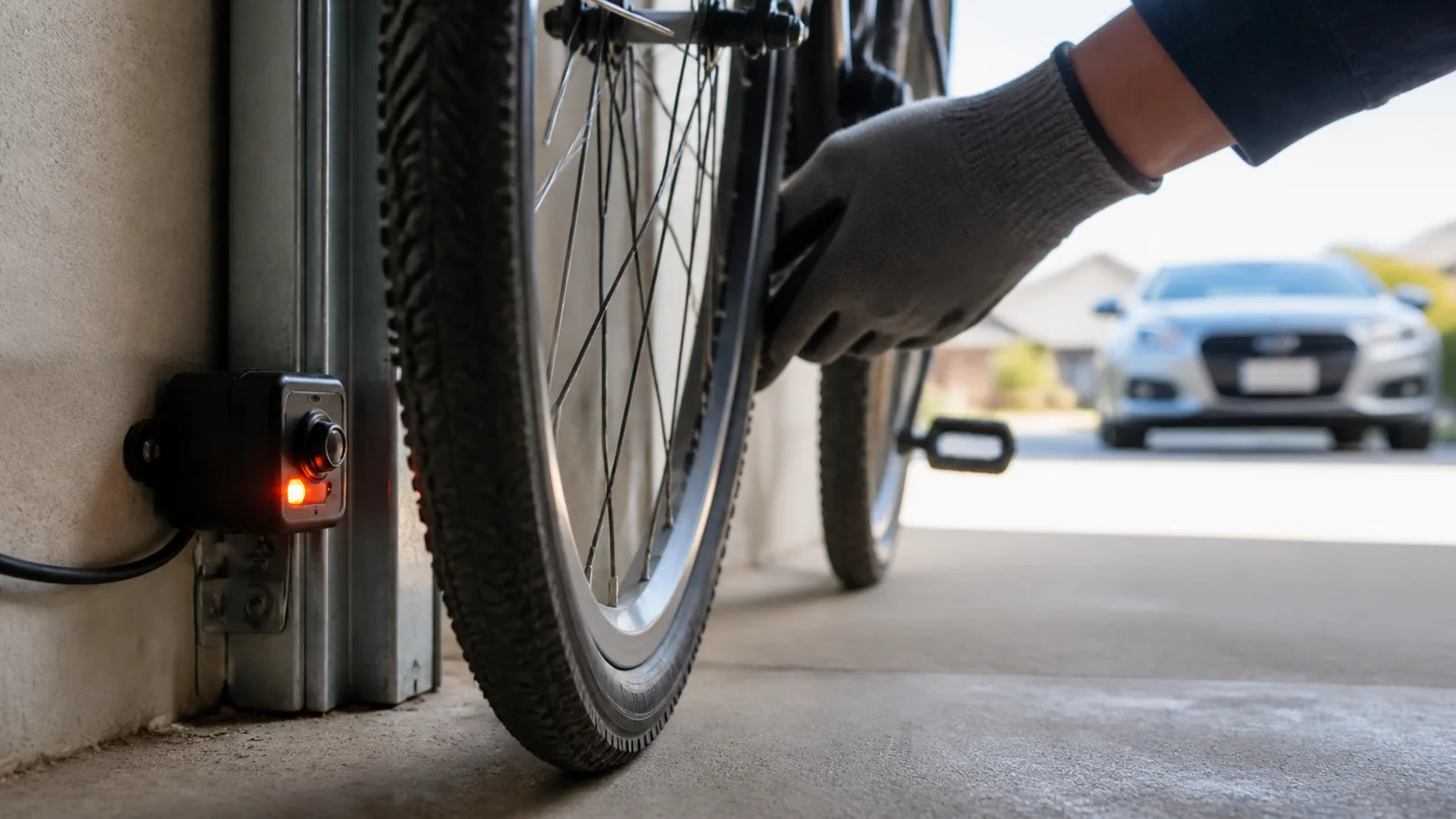
Two small sensors sit about ankle height on either side of the opening, and they have to see each other for the door to close. Anything interrupting that beam — a bike wheel, a wheelie bin, a bag of potting mix, a cobweb, a stray leaf — stops the door dead, and most openers then reverse and flash a light at you.
Look along the beam line and clear it. Then check the sensors are actually pointing at each other: a knock from a car door or a lawnmower is enough to twist one a few degrees, and the little indicator LED on each one will tell you. One steady, one flickering usually means alignment.
This is genuinely the most common cause and it costs nothing to rule out. Do it before you ring anyone, including us.
2. The close-force limit is set too tight
Openers have an adjustable force setting that decides how much resistance the motor tolerates before it decides something is in the way. Set too sensitively, the door reverses at the same point every time — often just as it touches the floor — because the normal friction of the last few centimetres reads as an obstruction.
The tell is consistency. If it stops at the identical spot on every attempt, it is a force or limit setting, not a random obstruction. It is adjustable, but it is also the setting that stops the door crushing something, so it wants setting by somebody who will then test it properly rather than turning the screw until the symptom disappears.
3. Something is genuinely binding in the track
In Perth this is very often sand and limestone dust packed into the guides or the track, particularly on the coastal strip and anywhere near new construction. A door that has become progressively slower and noisier over months, then finally started reversing, is usually telling you about friction rather than electronics.
It can also be a seized roller, a bent section of track, or a hinge that has worn enough to let a panel sit crooked. Look along the track for a shiny wear mark or a visible kink.
One thing not to do: oil the track. Oil holds sand, and in this city that turns a minor problem into a recurring one. Tracks want cleaning, rollers want the right lubricant, and the two are different jobs.
4. A broken spring, and the door only looks like it is working
If a spring has gone, the motor is suddenly trying to control the door's true weight — often 70 to 100 kg. It may still manage to drag the door up, and then fail to control it on the way down, so the safety system stops the cycle.
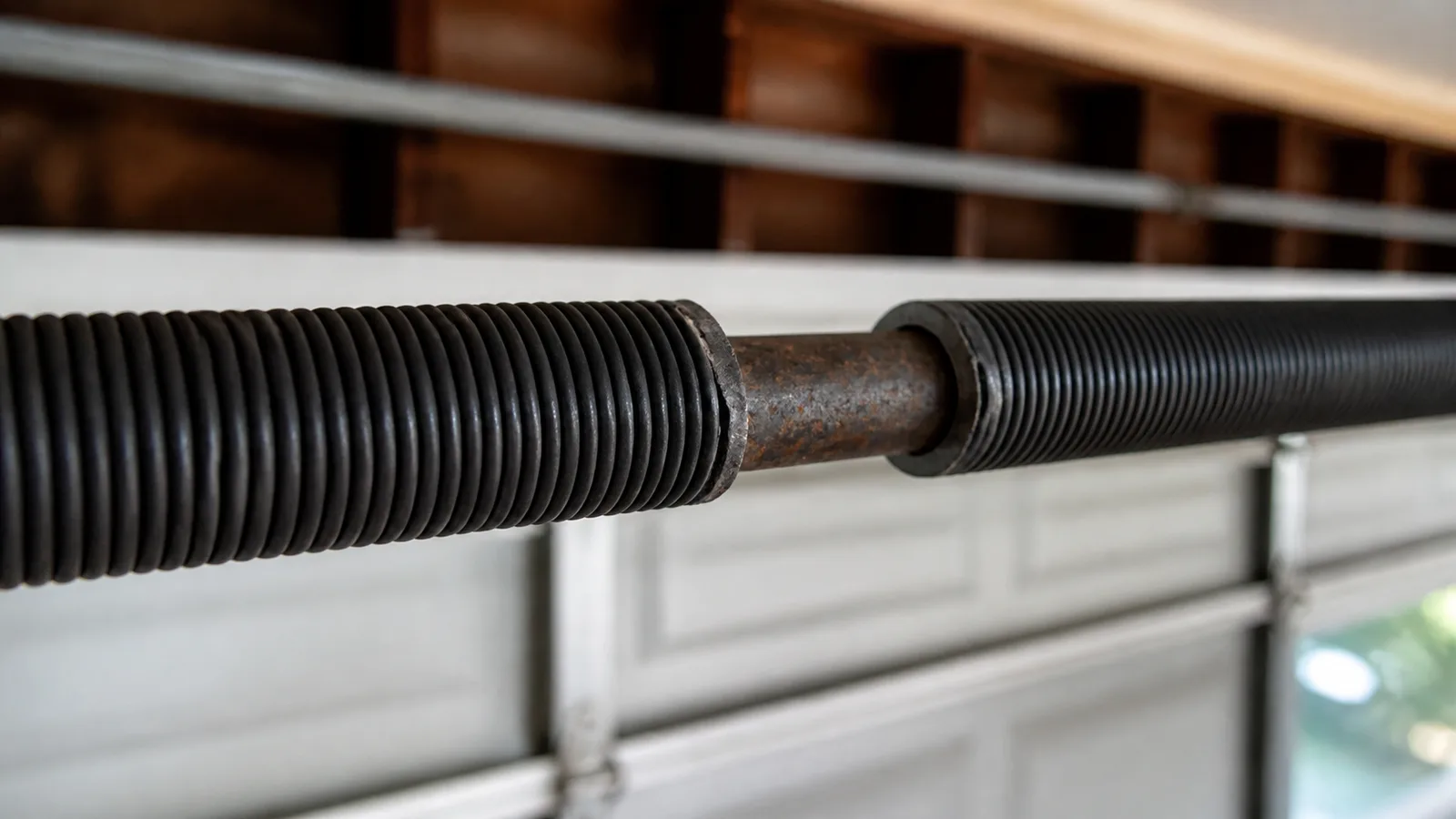
Look at the coiled spring above the door: a broken torsion spring shows a clear gap, like a section has been cut out of it. If you see that, stop. Do not run the motor again, and do not try to lift the door by hand.
There are no instructions for spring work on this site on purpose. A torsion spring stores enough energy to break bones, and it releases all of it at once if it is handled wrong.
5. The remote or wall button is sending a partial signal
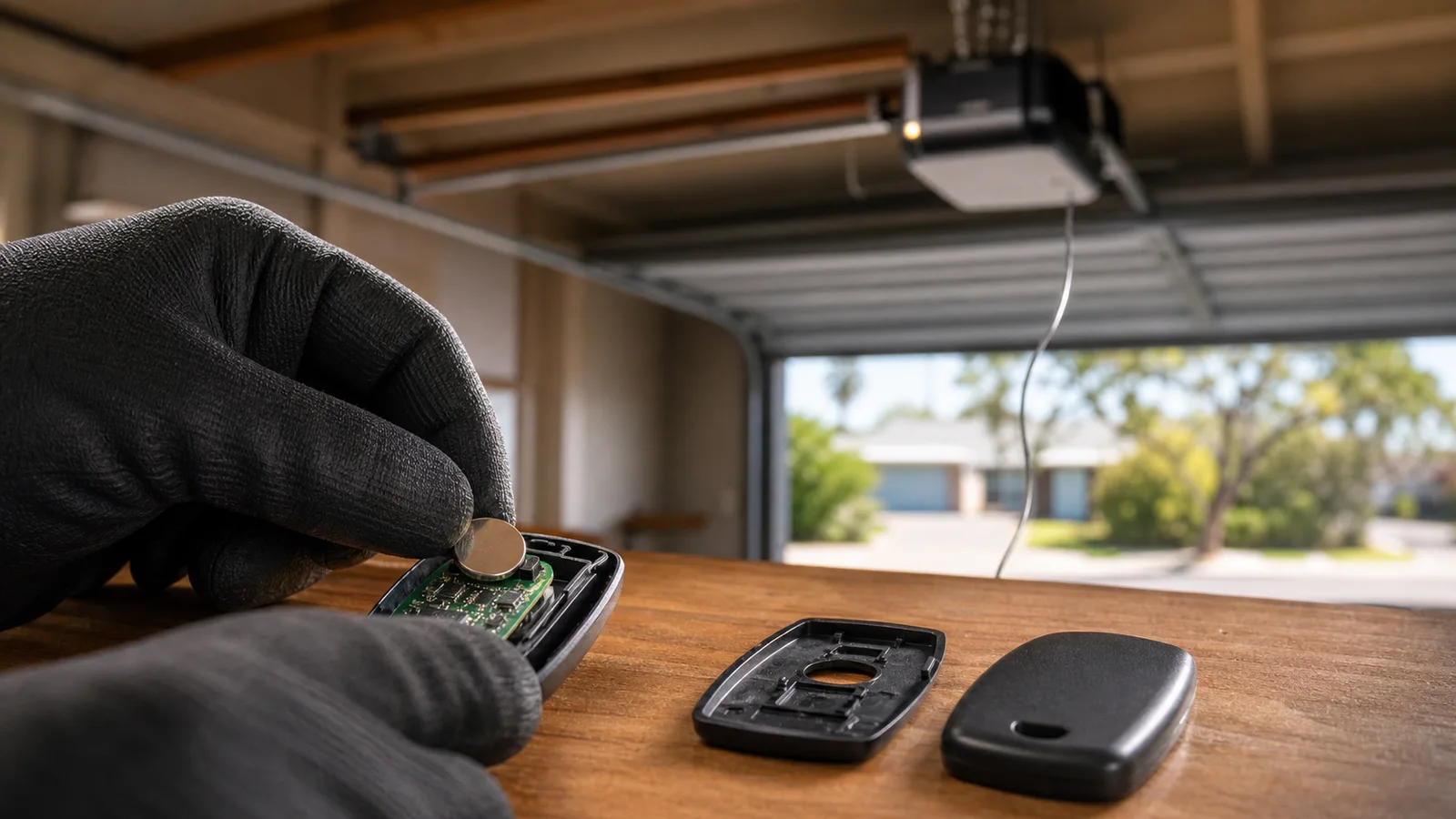
A failing remote battery can send enough signal to trigger the open cycle from close range but not enough to reliably trigger the close. If the wall button closes the door and the remote does not, you have found it — try a fresh battery before anything else.
If neither works, the problem has moved to the control board rather than the transmitter.
6. The travel limits have drifted
The opener knows where the floor is because someone told it once. Over years — and faster in Perth's temperature swings, which move the door slightly — that stored position can drift until the motor thinks the floor is lower than it is. It then pushes past the real floor, senses the resistance, and reverses.
The signature is a door that closes fully, touches down, and immediately opens again, without any obstruction anywhere.
7. A cable has come off its drum
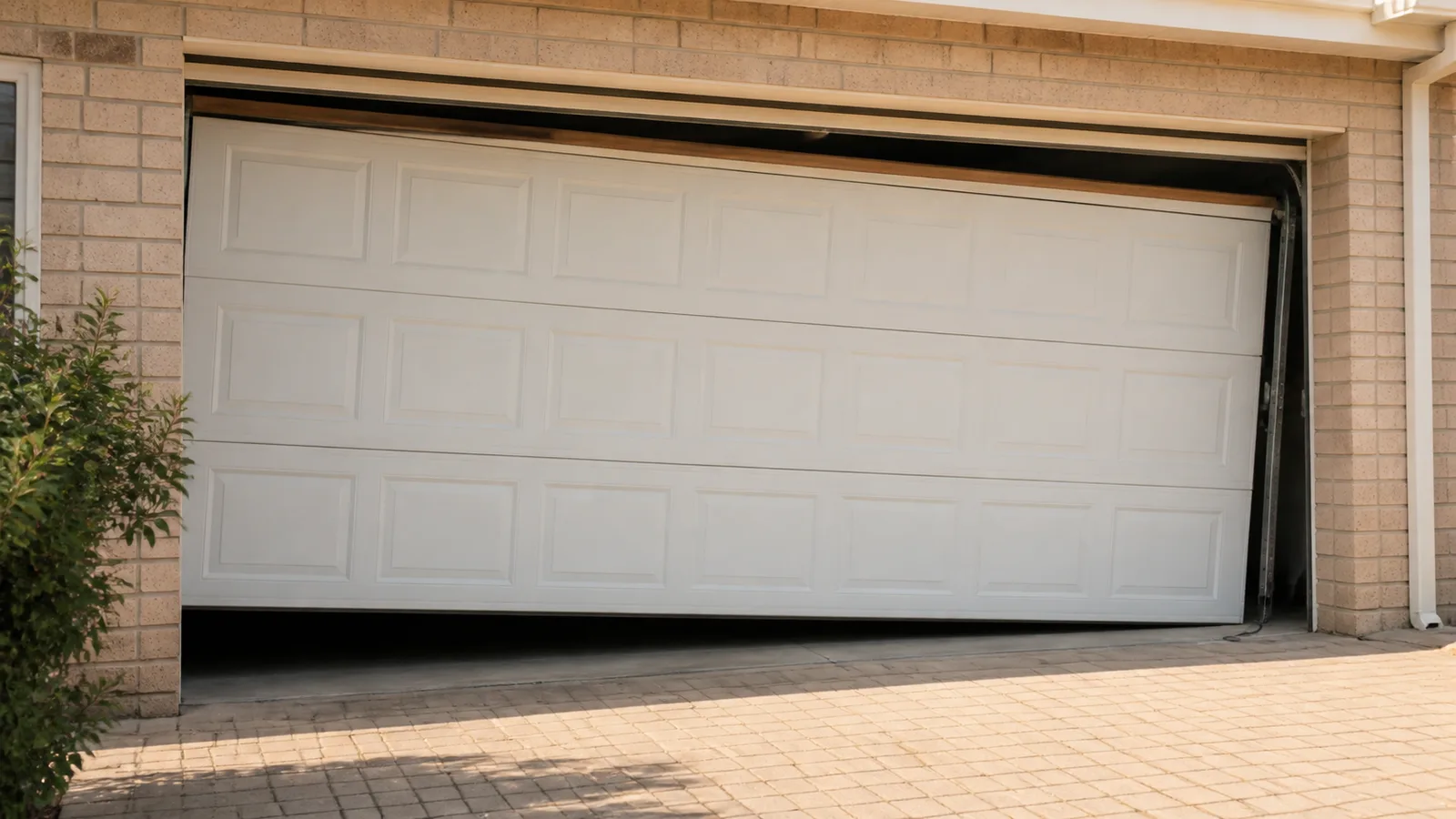
If one side drops faster than the other, or the door sits visibly crooked in the opening, a lift cable has probably jumped or unwound from its drum. The door may still move, but it is now travelling out of square and every cycle makes it worse.
Stop running it. A cable re-rig is a straightforward job; a cable re-rig plus a bent track plus two damaged panels is not.
8. The control board has failed
Least common of the eight, but it does happen — and in Perth it happens most in the Hills, where storm-season outages and surges take out boards more often than the coastal plain sees.
The clue is inconsistency with no pattern: works, then does not, then works again, with no relationship to weather, obstruction or which control you use.
What to do right now
Work through it in that order. Sensors and remote batteries are free and account for a large share of these calls. If you get as far as a visible gap in the spring, a crooked door or a cable off its drum, stop there — those three all get worse with every further attempt, and a door left half-closed overnight is a house left open.
- Safe to check yourself: sensor beam, sensor alignment, remote battery, obvious obstructions
- Stop and call: visible gap in the spring, door sitting crooked, cable off the drum, door suddenly very heavy
- Never: attempt spring, cable or drum work yourself
Still stuck?
Describe what the door is doing and we will tell you what it is. The diagnosis is free and covers 288 Perth suburbs — and if it turns out to be something you can sort out yourself, we will say so.