Perth conditions · 7 min read
Living Within 2 km of the Beach? What Salt Does to a Roller Door
Perth's coastal strip runs the length of the metro, and a large share of the suburbs we cover sit inside two kilometres of the ocean. Every one of those doors is in a corrosive environment, whether or not it looks like it.
Salt does not attack the part you look at
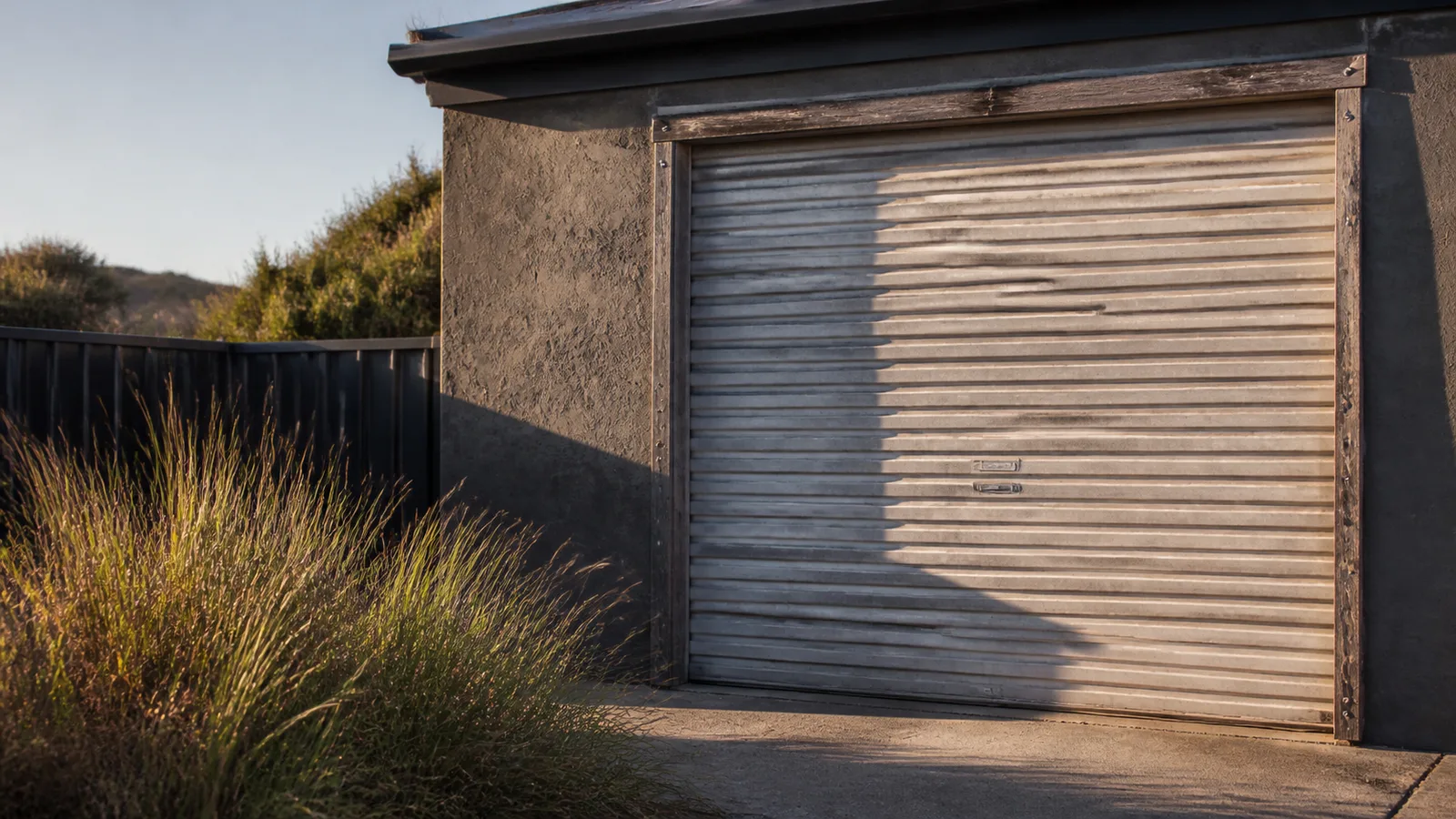
The painted outer face of a garage door is the best-protected surface on it. It is coated, it is smooth, and rain washes it. That is exactly why it is a bad place to judge the door's condition from.
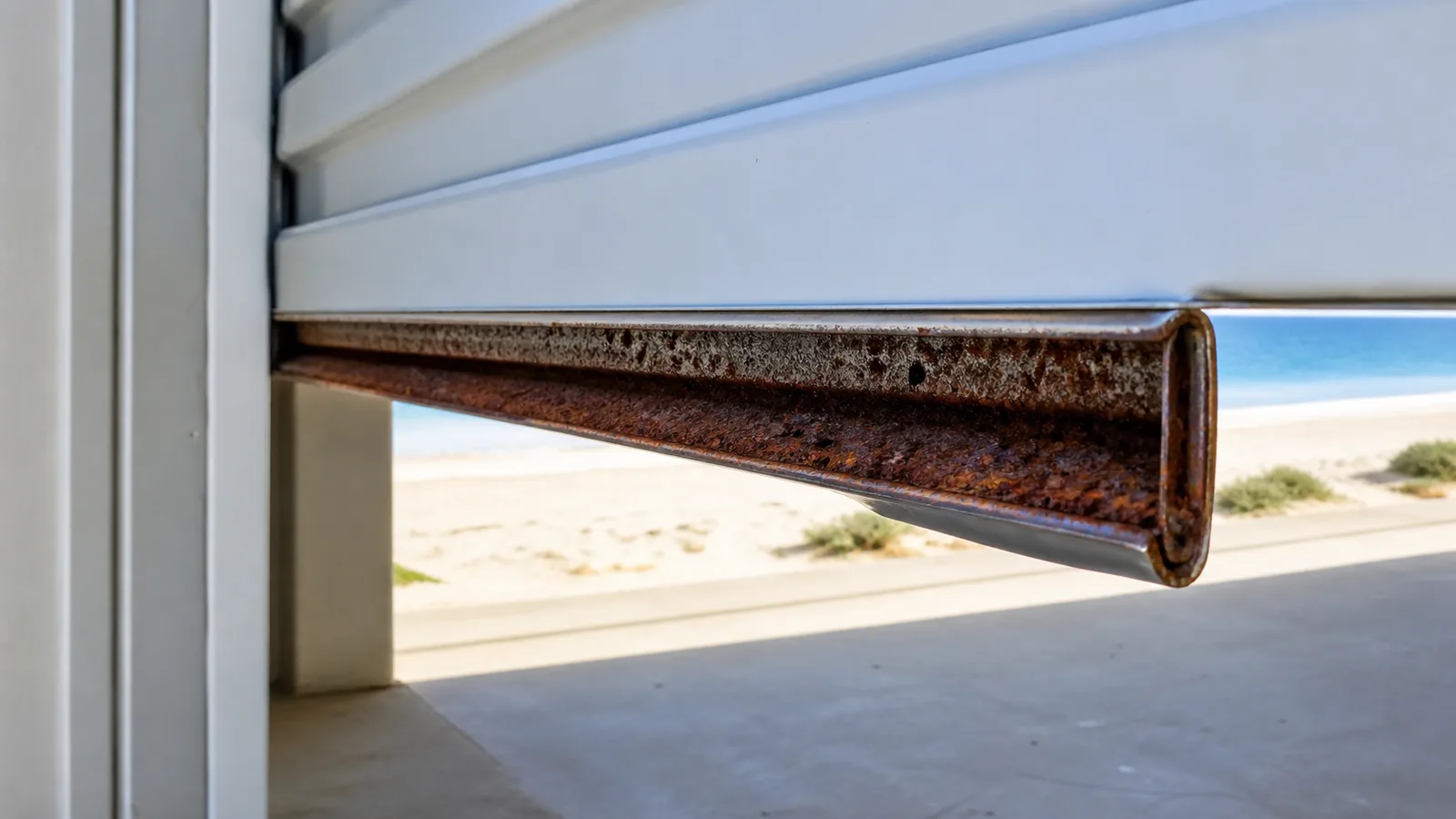
What corrodes first is everything that is either uncoated, cut, or permanently damp: the inside of the bottom rail, the fixings holding the guides and brackets, the cut edges of the curtain where the coating is thinnest, and the spring anchors.
By the time there is visible rust bloom on the outside of a coastal door, the bottom rail has usually been deteriorating from the inside for a year or more.
The order things fail on a coastal roller door
There is a consistent sequence, and knowing it lets you get ahead of the expensive part.
- Fixings and fasteners first — they are small, often uncoated, and they are what holds everything else on
- The bottom rail second — it sits closest to wet ground and holds water inside its own profile
- Curtain edges third — the cut edge running in the guide is where the coating is thinnest
- Spring anchors and the axle fourth — by which point the door is unsafe rather than merely worn
The mechanical tell, not the visual one
Because the visual signs lag, judge a coastal door by how it behaves. A door that has started to drag, that sounds gritty in the guides, that sits very slightly crooked, or that has become noticeably heavier to lift by hand, is telling you about corrosion and wear well before it shows one.
Run your hand along the inside of the bottom rail. If it comes away with orange dust, that section is already going.
What marine-grade hardware actually changes
It is not marketing, and it is also not magic. Marine-grade or higher-spec fixings, brackets and fasteners are made to resist exactly this kind of chloride attack, and on a beachfront installation they routinely last several times as long as the standard parts they replace.
What they do not do is protect the curtain or the bottom rail, which are the door itself. Those come down to specification and coating at the point of purchase, which is why replacing a coastal door with an identical builder-grade unit gets you an identical failure in an identical timeframe.
If you are within a kilometre or so of the water, it is worth having that conversation before the replacement rather than after it.
Servicing on the coast is a different job
A coastal service pays attention to different things: it is a corrosion inspection as much as a mechanical one. Fixings get checked and replaced before they fail rather than after, the bottom rail gets looked at from the inside, guides get cleared of the salt-and-sand mix that packs into them, and the curtain edges get examined where they run.
Twice a year is the interval, and on the front-line streets there is a reasonable argument for timing one of them right after summer, when the sea breeze has been driving onshore every afternoon for months.
Is it worth repairing a corroded coastal door?
It comes down to the curtain, not the age. A twenty-year-old coastal door with a straight, sound curtain and a rusted bottom rail is a bottom rail job and worth doing. One where the curtain edges have gone or the bottom section has perforated is throwing good money after bad, because the next failure is already in progress a few centimetres up.
We will tell you which one you have, and there is no charge for that opinion.
Still stuck?
Describe what the door is doing and we will tell you what it is. The diagnosis is free and covers 288 Perth suburbs — and if it turns out to be something you can sort out yourself, we will say so.