Perth conditions · 9 min read
Salt, Sand and 40 °C: Why Perth Garage Doors Fail Differently
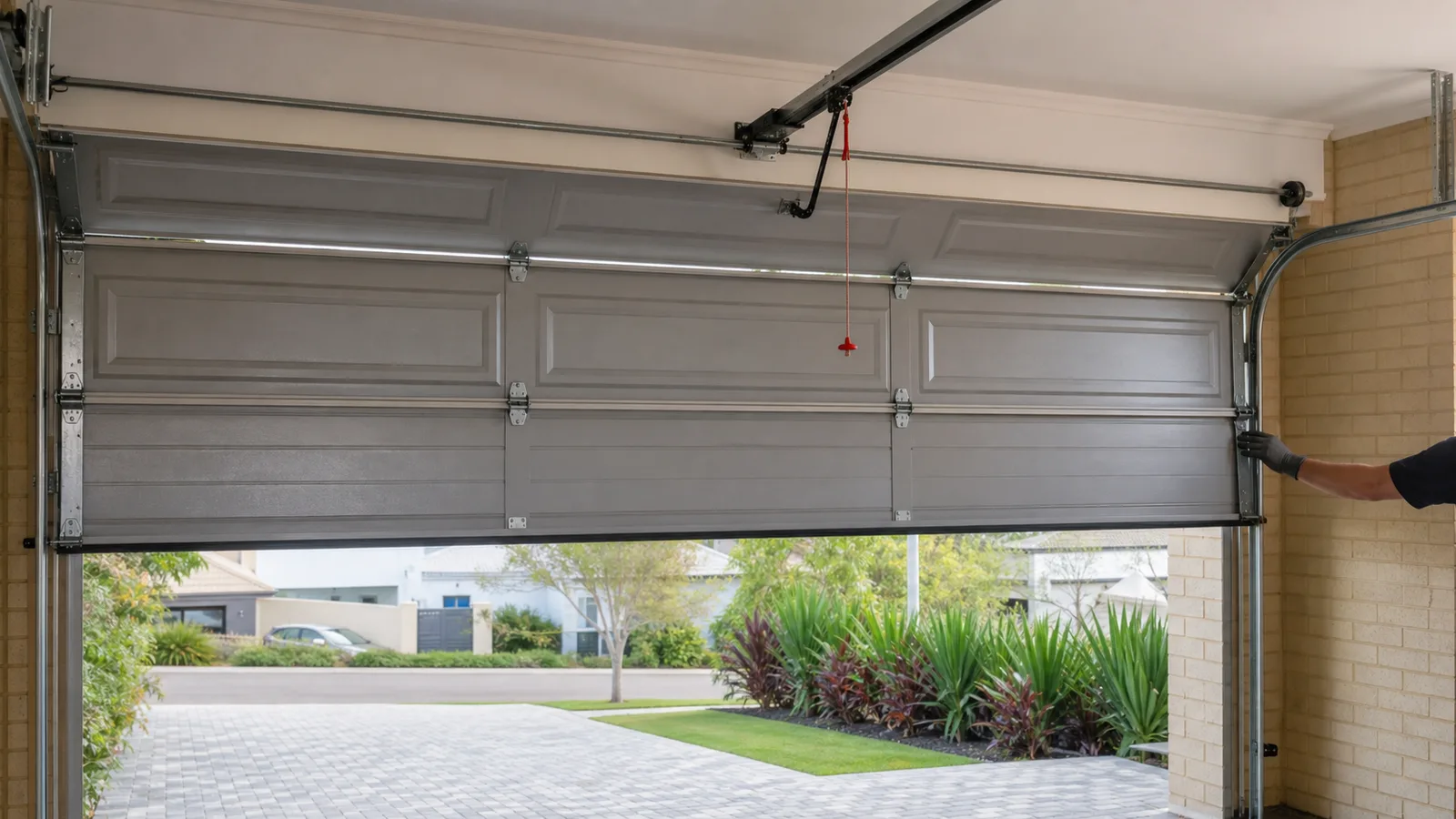
Garage doors are built to a national specification and then installed into wildly different conditions. Perth is one of the harder ones, and it is hard in three separate ways depending on where in the metro you are. The failure list on a beachfront street in Scarborough has almost nothing in common with the failure list in Mundaring.
The coastal strip: salt, and it works from the inside
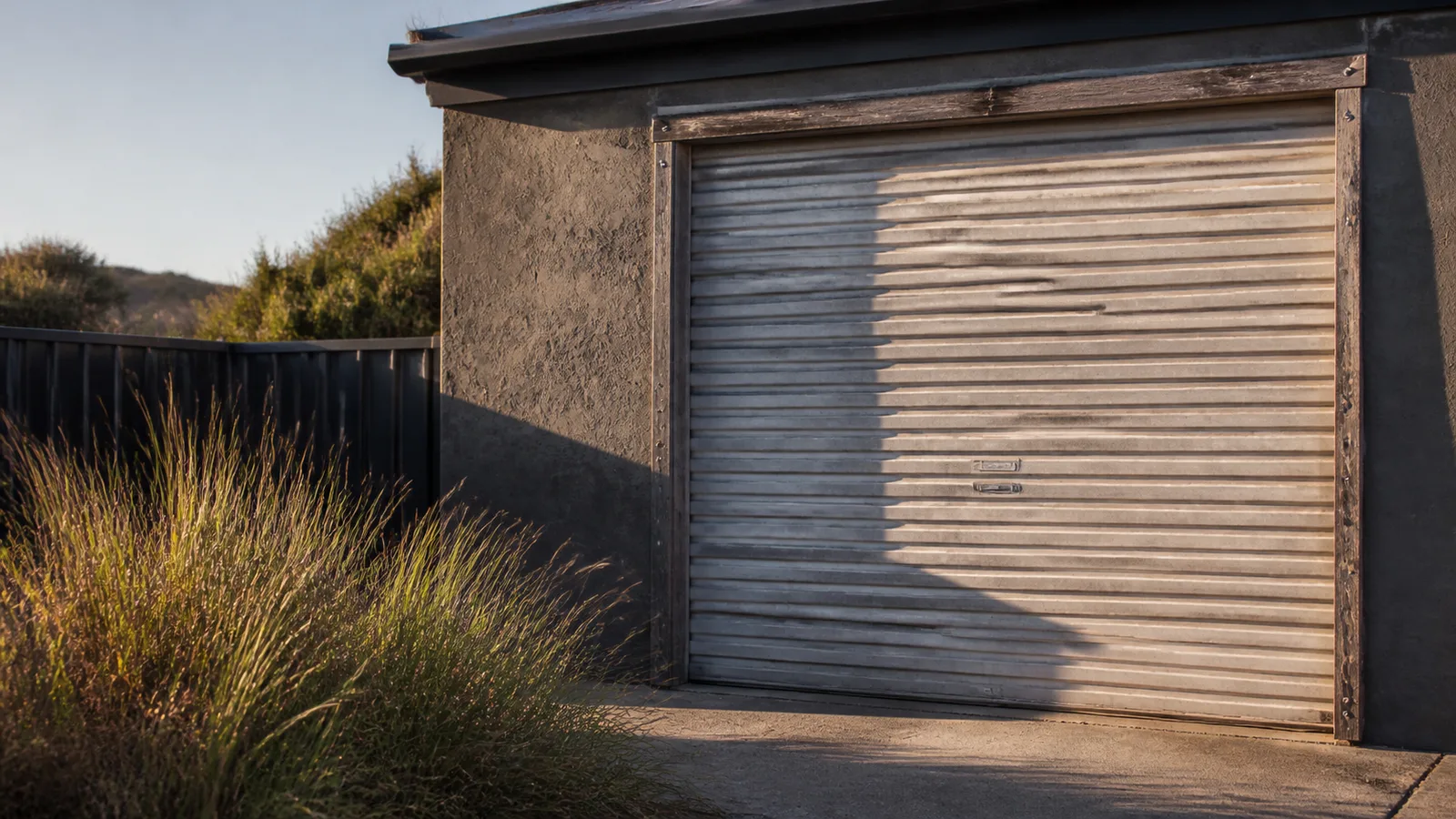
Within roughly two kilometres of the ocean — a belt that covers a large share of Perth's population — salt-laden air is the dominant factor in how long a door lasts. It is carried inland on the sea breeze every afternoon, and it settles into every gap.
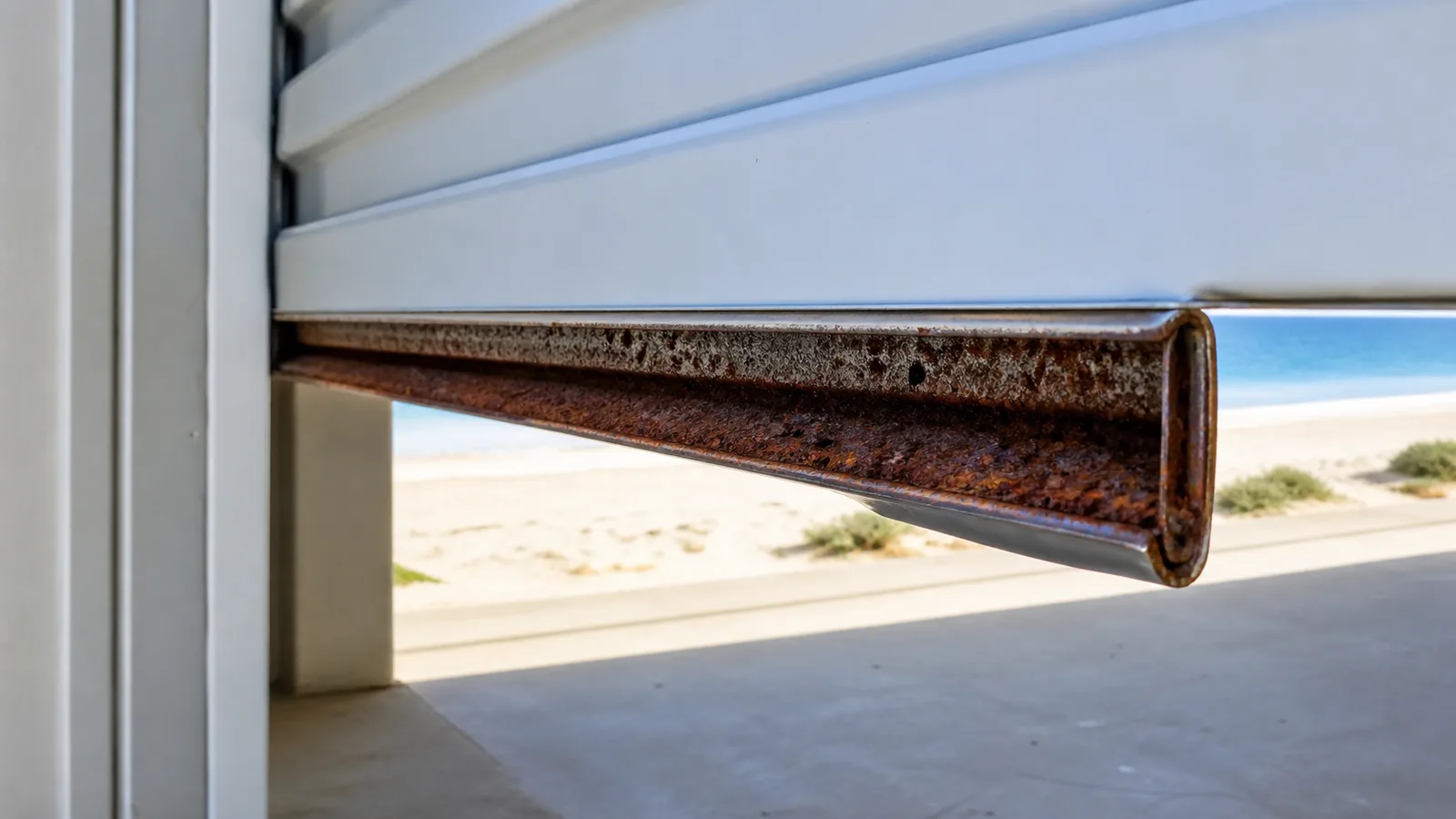
The critical thing to understand is that salt corrosion does not start on the painted face you can see. It starts on the fixings, inside the bottom rail, and along the cut edges of the curtain where the coating is thinnest. By the time there is a visible rust bloom on the outside, the bottom rail has usually been going for a year or two.
The tell is mechanical rather than visual: a coastal door that has started to drag, sit slightly crooked, or sound gritty in the guides is often further along than it looks. Bottom rails, fixings and spring anchors are what we replace most on this strip.
Inland: sand, limestone dust, and the mistake almost everyone makes
Move away from the coast and salt stops being the problem — but Perth's other constant takes over. Fine sand and limestone dust get into everything, and garage door guides and tracks are effectively designed to collect them. Anywhere near new construction it is worse again, and the northern and eastern growth corridors are permanently near new construction.
Packed guides make the door drag. A dragging door makes the motor work harder. A motor working harder fails early. It is a slow chain and it starts with dust.
And here is the mistake: people spray the track with oil or WD-40 because the door is noisy. Oil holds sand. Within weeks the track has a grinding paste in it and the door is worse than before. Tracks want cleaning, not lubricating; rollers and bearings want the correct lubricant in the correct places. WD-40 in particular is a solvent — it strips lubricant out of bearings, so the door is quieter for a fortnight and worse off afterwards.
The sun: what 40 °C afternoons do to a spring
Perth summers put a west-facing garage door under sustained UV and heat that most of the country does not see. Two things follow.
The first is spring fatigue. Springs are steel under constant tension, and heat cycling accelerates the fatigue that eventually breaks them. A door rated for a given number of cycles reaches that number sooner here.
The second is the door itself. An uninsulated steel door on a west elevation radiates heat into the garage all afternoon, which matters a great deal if the space is also a workshop, a gym or a second living area — and increasingly it is.
The Hills: a completely different list
On the Darling Scarp the problems change again. Jarrah and marri litter fills tracks and guides year-round, and it is coarse enough to jam a roller rather than merely slow it.
Driveways are longer and often steep, which changes how the door is approached and how much grit gets carried into the opening.
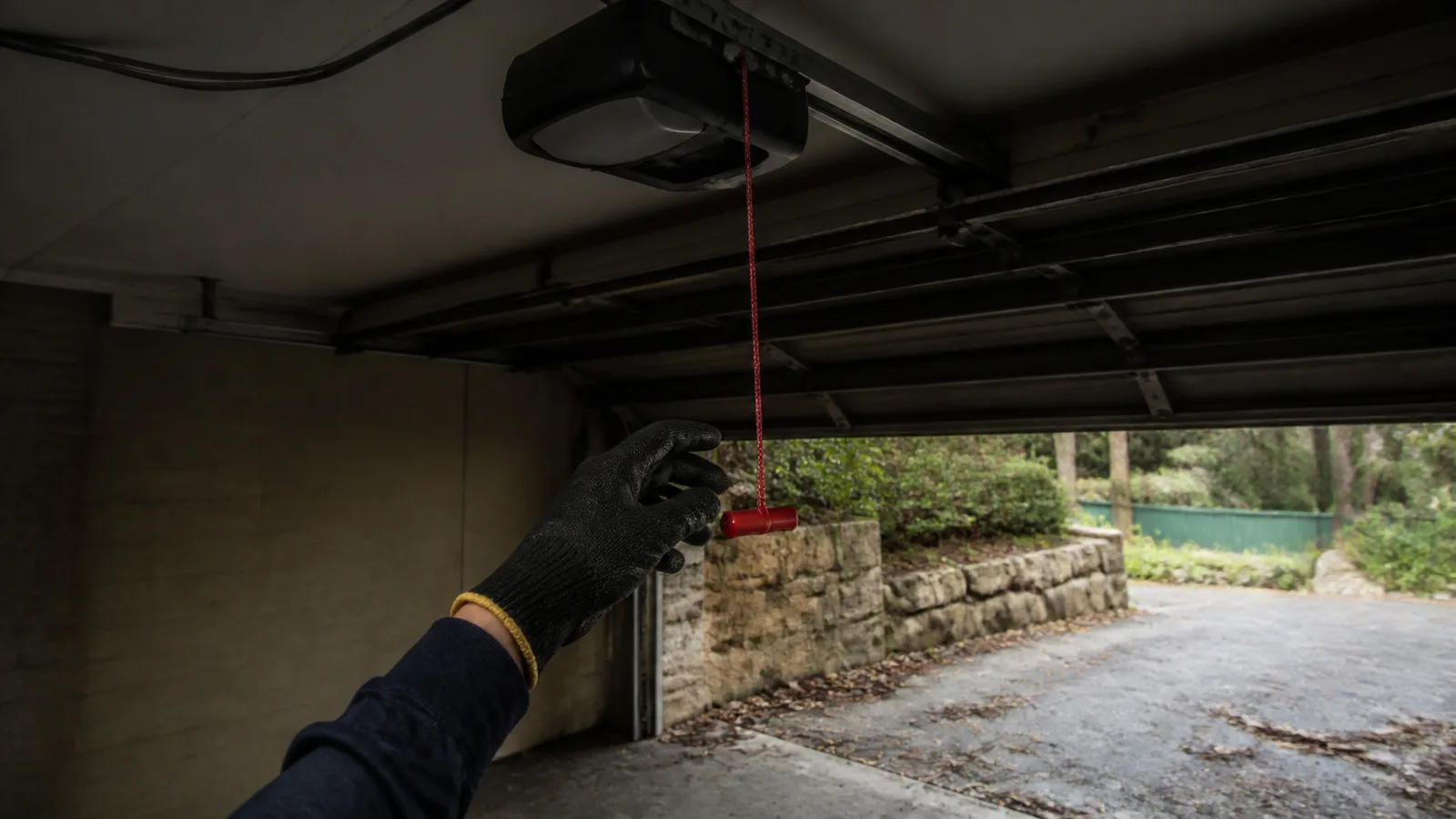
And storm season takes out power far more often up here than on the coastal plain. What that damages is usually not the motor but the control board, through surges — which is why we carry board and sensor parts on the Hills runs. It is also why knowing where your manual release cord is matters more in Kalamunda than it does in Como.
So how often should a Perth door be serviced?
Twice a year. That is roughly double the interval the east coast is usually given, and the reason is environmental rather than commercial: salt on one side of the metro, dust on the other, and UV over the whole of it.
A service checks the six things that account for most failures — balance, spring condition, cable and drum wear, rollers and track, sensor alignment, and motor force settings. Almost every emergency call-out we attend was visible months earlier as one of those six.
What this means for your door
Find your suburb on this site and it will tell you which of these three environments you are actually in — we work it out from measured distance to the coast, to the river and to the scarp rather than from a guess.
- Within 2 km of the beach: watch the bottom rail and fixings, service twice yearly, specify marine-grade hardware on replacement
- Inland and growth corridors: keep tracks and guides clean, never oil a track, expect batch failures across same-age streets
- Hills: clear bush litter from tracks, know where the manual release is, expect surge damage to boards after storms
Still stuck?
Describe what the door is doing and we will tell you what it is. The diagnosis is free and covers 288 Perth suburbs — and if it turns out to be something you can sort out yourself, we will say so.