Perth conditions · 7 min read
Storm Season in the Perth Hills: Power Cuts, Manual Release and Bush Litter
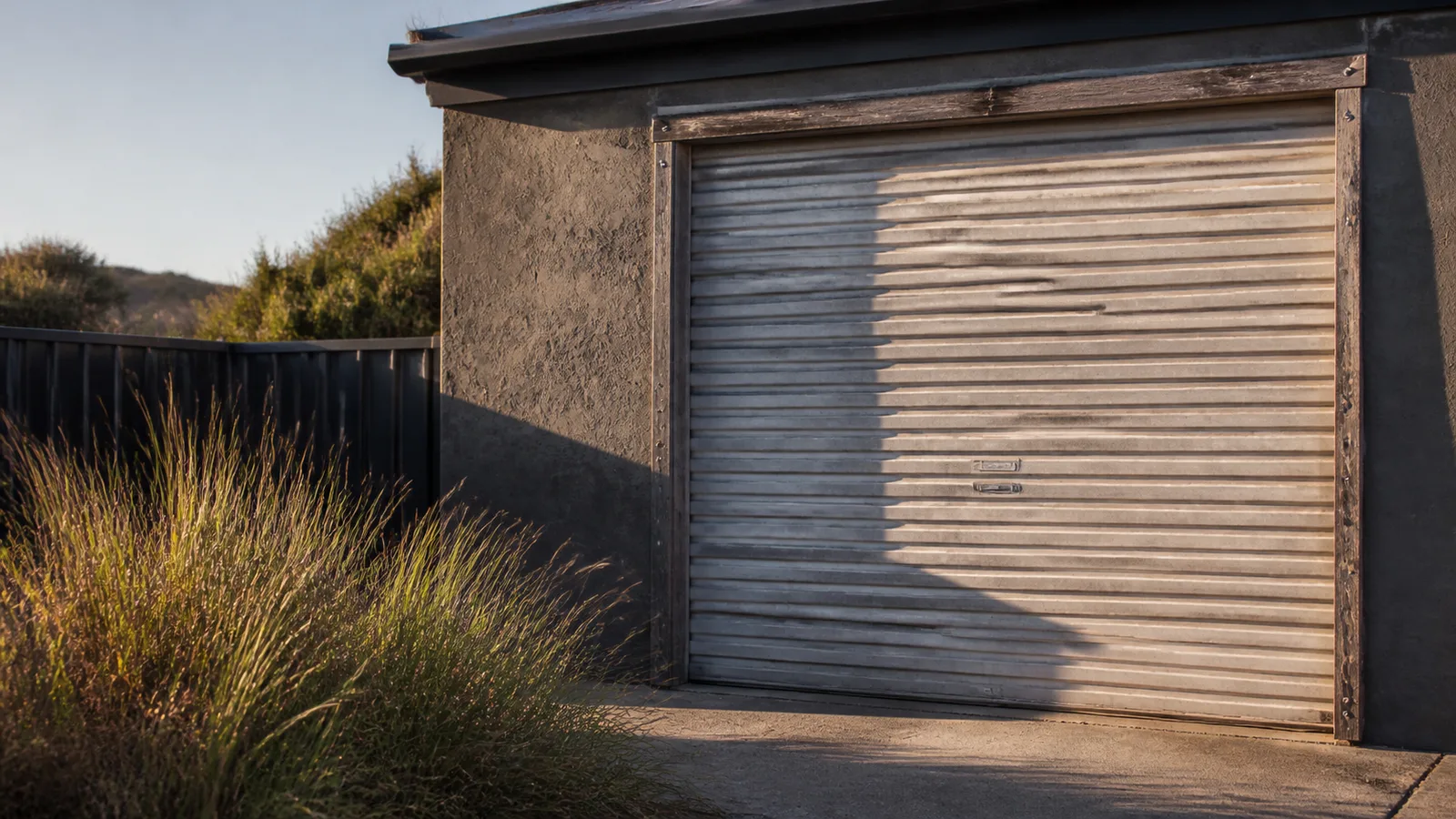
On the Darling Scarp a garage door faces a set of problems the coastal plain simply does not have. Jarrah and marri litter fills tracks all year, driveways have real gradient, and storm season takes the power out often enough that knowing how to open your door by hand stops being trivia.
How to use the manual release — and how to put it back
This is the one place on this site with a genuine step-by-step, because the manual release is a safety feature the householder is meant to operate.
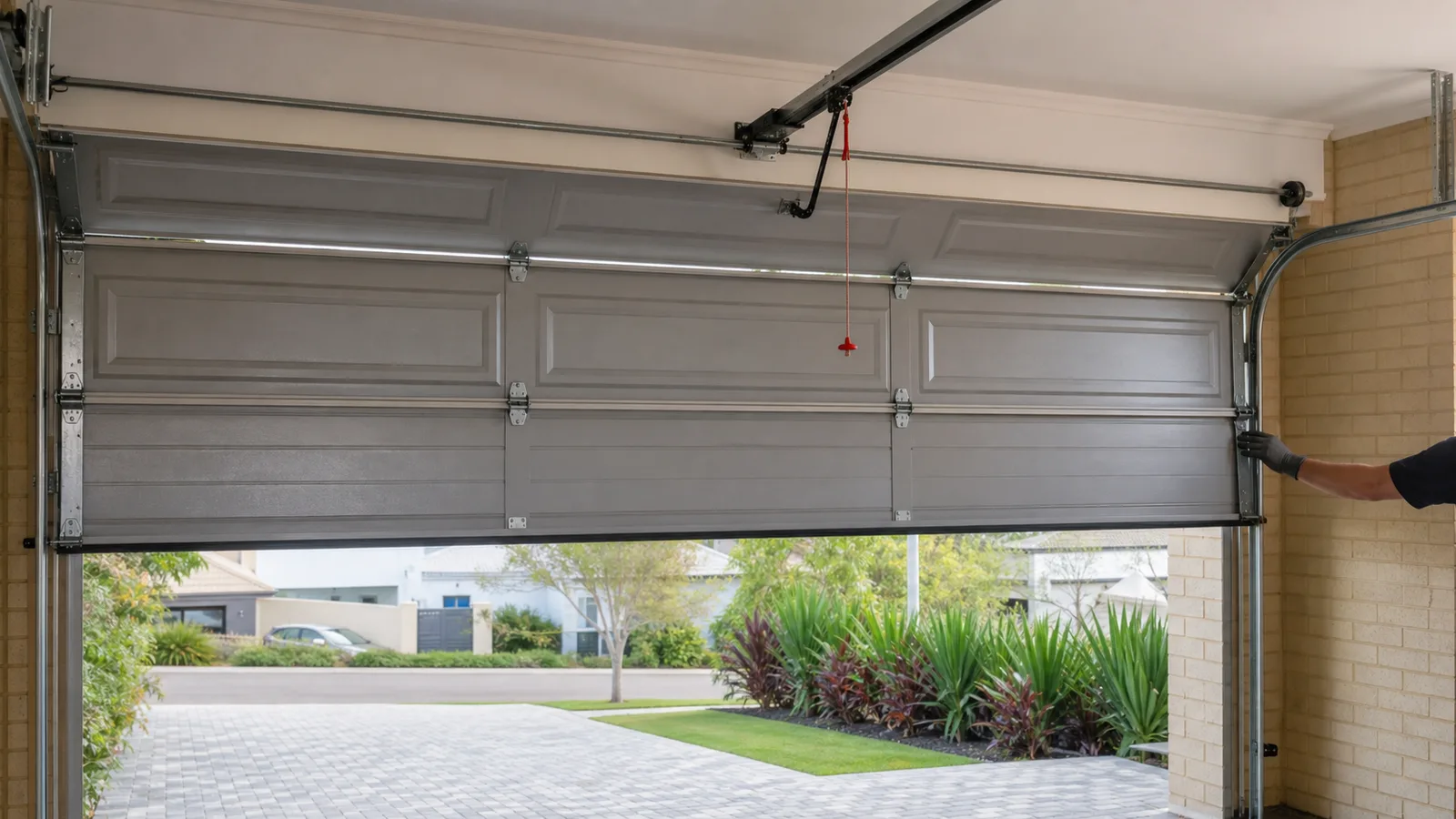
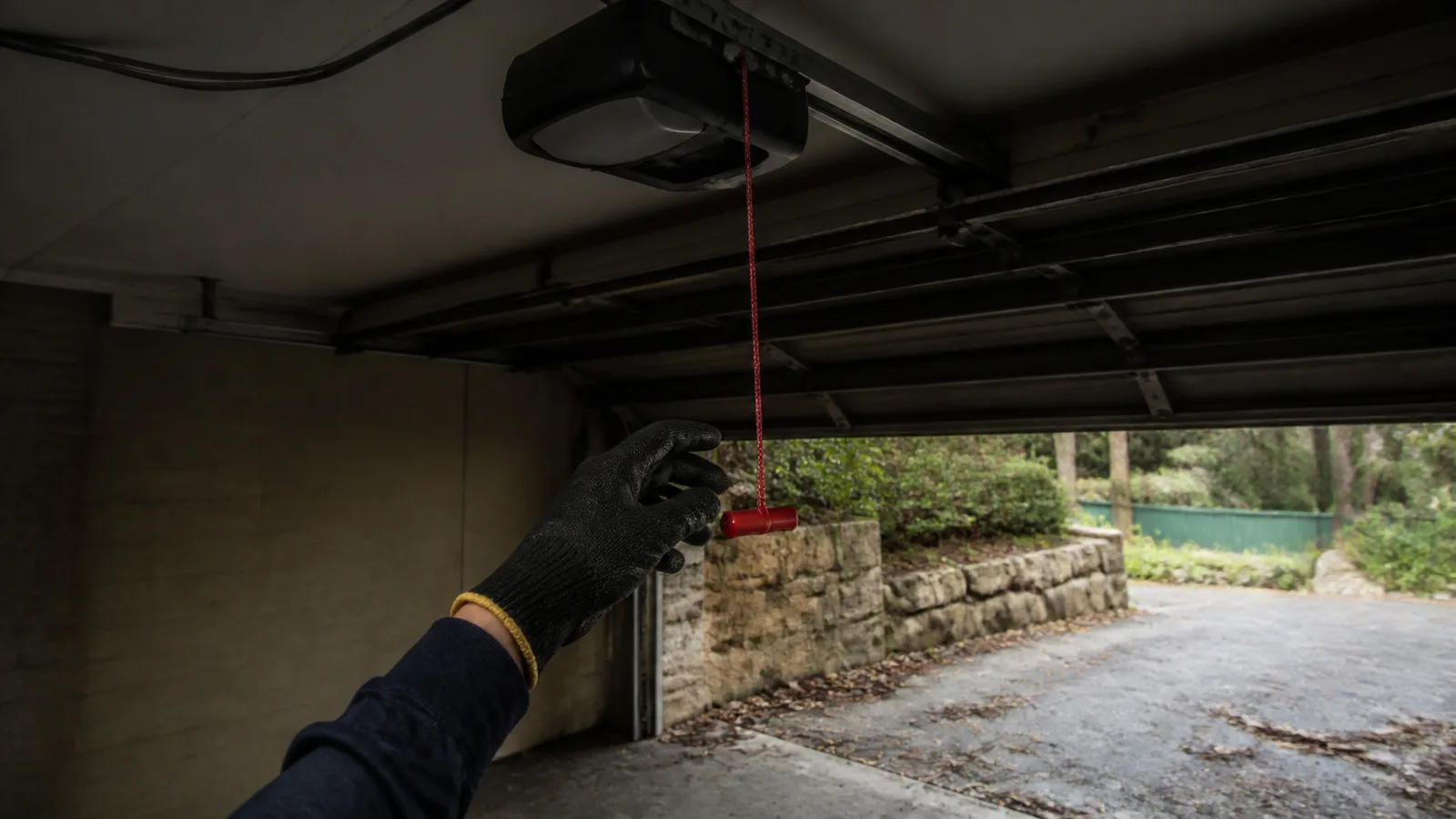
The release is normally a red cord hanging from the carriage that runs along the ceiling. Pulling it down and back disconnects the door from the motor so it can be lifted by hand.
⚠️ Before you pull it: the door must be fully CLOSED, and the springs must be intact. If the door is part-open when you release it, or if a spring has gone, you are about to be holding its entire weight — often 70 to 100 kilograms — with nothing else supporting it.
To re-engage once power is back: close the door fully by hand, then run the motor. On most units the carriage re-latches automatically as it travels past. On some you pull the cord toward the door instead. If the motor runs and the door does not move, the carriage has not caught — stop, and do not keep cycling it.
- Door fully closed before you release it — always
- Never release a door with a broken spring
- Re-engage with the door closed, then let the motor find the carriage
- If the motor runs and the door does not move, stop cycling it
Storms kill boards, not motors
This surprises people. A storm outage in the Hills rarely damages the motor itself. What it damages is the control board, through the surge on the way back up.
The signature is specific: the door was fine before the storm, and afterwards neither the remote nor the wall button does anything. If only the remote is dead, that is more likely a lost pairing — worth re-pairing before assuming the worst, because it costs nothing.
A failed board is usually a repair rather than a whole new motor, and it is worth asking specifically. We carry board and sensor parts on the Hills runs for exactly this reason.
Battery backup earns its place up here
In most of Perth a battery backup unit is a convenience. In Mundaring, Roleystone, Kalamunda or Parkerville it is closer to a necessity — outages are frequent, and some of them are long.
It also removes the most common way people damage a door: releasing it mid-travel in the dark because they need the car out.
Worth noting that backup batteries themselves go flat over years and are a genuine failure cause after a long outage. If yours has never been replaced, it is probably not going to help you.
What jarrah and marri litter actually does
Bush litter is not just untidy. Fine bark and leaf matter packs into the side guides of a roller door and the horizontal track of a sectional one, and it compresses into a dense mat that the door then has to drag itself through.
The result is the same chain as sand on the plain: a dragging door loads the motor, an overloaded motor wears early, and somewhere in between a roller can walk out of the track.
It is worse in the Hills for two reasons — the litter is coarser, and properties with long driveways carry more of it to the opening rather than losing it at the gate.
Clear the guides and the bottom of the track with a brush, not a hose. Water packs the debris further in and then it stays damp against the metal.
Gradient, and why it wears one side
Hills driveways are rarely level, and a sloping approach changes how a door is loaded every single cycle. It is subtle, and it shows up as asymmetric wear — one side of the track marking before the other, one roller going first, one cable showing wear.
That is worth knowing at diagnosis, because replacing the failed component without noticing the asymmetry means the same side fails again.
Before the next storm season
Two things are worth doing while the weather is fine, and neither takes long.
Clear the tracks and guides properly, and check the door's balance by hand: released from the motor with the door closed, it should lift with modest effort and stay roughly where you leave it. If it slams down or will not move, the springs need attention before anything else does.
Find your manual release cord and make sure everyone in the house knows where it is. Standing in a dark garage in a storm is a poor time to be looking for it.
Still stuck?
Describe what the door is doing and we will tell you what it is. The diagnosis is free and covers 288 Perth suburbs — and if it turns out to be something you can sort out yourself, we will say so.